
Categories
Blog Post Class of 2024

Standardising Section 106 agreements is overdue. Making it stick will be harder.

Anyone involved in housing delivery knows that negotiating and agreeing Section 106 has become one of the biggest drags on the system. It’s not because planning obligations are wrong in principle. Quite the opposite. Done well, they secure affordable housing, infrastructure and mitigation that make development acceptable and sustainable. The problem is the process.

I was pleased to host the recent launch of the Land, Planning and Development Federation’s work with Town Legal and Lord Banner KC on simplifying and standardising Section 106 agreements. Their report sets out a compelling case for reform, backed by hard evidence on delays. Data from the Home Builders’ Federation shows that average S106 timelines are now stretching well beyond a year, with some agreements taking several years to conclude. That’s time when homes that already have a resolution to approve are simply not being built.

There is a straightforward and sensible solution to addressing this delay. Introduce a national template for small and medium-sized schemes, reduce the endless re-drafting of boilerplate clauses and focus negotiations on what actually matters on a site; the local context and local need. A national template will deliver faster decisions and result in lower legal costs, improving viability, and removing friction from the process. For SME builders in particular, these delays can be the difference between a viable scheme and one that never gets delivered.

But we should be clear-eyed. Standardisation alone will not fix the problem.

I have seen first-hand how even well-designed standard documents can get picked apart in practice. We have been here before in the construction sector. NEC contracts were meant to simplify delivery and drive collaboration. PAS 91 was designed to streamline pre-qualification for public schemes. In both cases, lawyers across the system found ways to add caveats, amendments and bespoke wording until the standard became anything but.

There is no reason to think Section 106 will be immune from the same behaviour.

That is why Government has a critical role to play if this reform is to land properly. Guidance matters. The National Planning Policy Framework and Planning Practice Guidance needs to go further than warm words about engagement and efficiency. They should actively promote the use of standardised Section 106 templates, set clear expectations that deviation from agreed boilerplate should be the exception not the rule, and require local planning authorities to justify where and why they depart from national templates.

Centralising this element of planning will not strip councils of discretion. Local variation will always be needed and possible. But predictability, proportionality and pace are essential if we are serious about the delivery of 1.5 million homes. A standard starting point, backed by firm national guidance, gives councillors confidence, reduces risk for developers, and helps officers manage stretched workloads.

If our Secretary of State Steve Reed MP, and Housing Minister Matthew Pennycook MP are serious about building more homes, which I believe they are, especially through SME builders, then fixing the Section 106 process is essential. Simplifying and standardising is the right direction of travel. But without Government being explicit, consistent and firm in policy and guidance, the system will default back to complexity.

The opportunity is there. We should take it, and make sure it sticks.
Categories
Blog Post

Ensuring resident safety: driving up property management standards

Deputy Prime Minister and Secretary of State for Housing, Communities and Local Government, Angela Rayner confirmed the Government’s response and adoptions of the recommendations of the Grenfell Tower Inquiry report this week (Wednesday 26th February). Phase 2 of the report was a watershed moment, exposing systemic failures in tall residential building safety and outlining clear recommendations to prevent another tragedy. I was proud to be in the Chamber and place on record my support for the Government’s response and raise some questions on behalf of the construction industry.

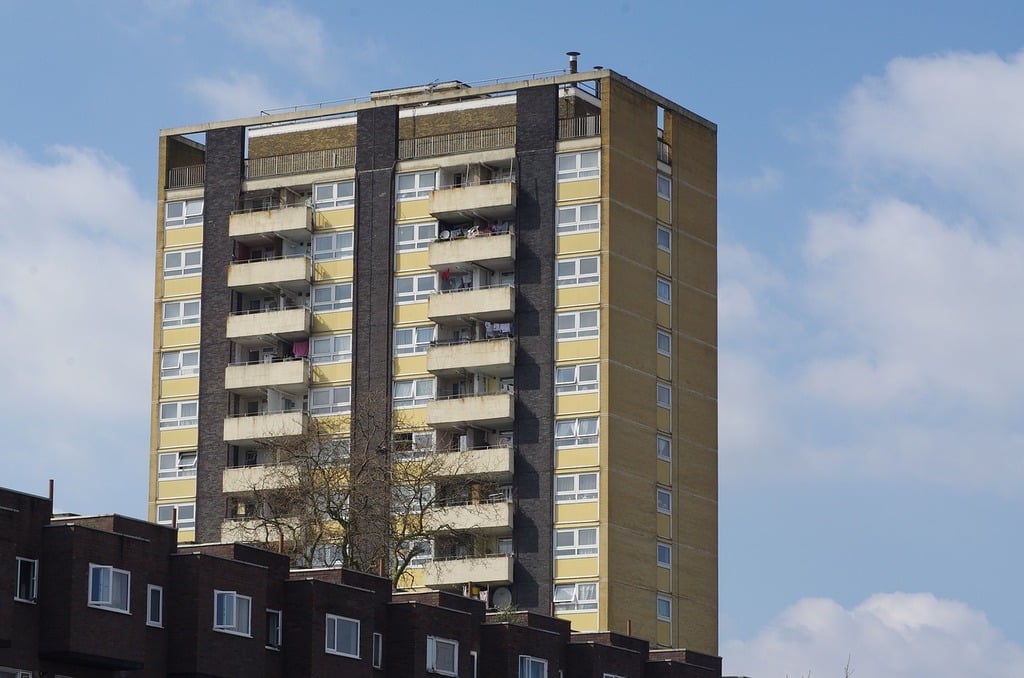
This weekend, Labour politicians from across local and national government are gathering at the East Midlands and West Midlands Labour Conferences. While London has the highest concentration of tall buildings, it is important to highlight the challenge outside of the capital. Recent data shows that cities including Leicester, Nottingham, Wolverhampton, and Coventry all have between 11-50 buildings over 11 metres requiring remediation. Birmingham has the highest number outside of the London boroughs, with 201-400 buildings still awaiting safety work. This leaves many people living in high-rise blocks across the Midlands in danger in their homes.

Since my election last year, I have worked with The Property Institute (TPI), which campaigns for the regulation of property managers to improve building safety. Many property managers have stepped up since Grenfell to protect residents by becoming key drivers of critical repairs and multi-million-pound remediation efforts, despite this not being within the original remit of their role. Many are professionally qualified and competent. However, the absence of regulation allows dangerously under-qualified operators to take on this vital role, putting residents at further risk – from both the homes in which they live and the people they trust to manage them.

Across the country, thousands remain stuck in unsafe homes, anxiously awaiting remediation. Government data shows that 70% of buildings over 11 metres identified with dangerous cladding have yet to be fully remediated. The Grenfell Inquiry exposed the failures of the Tenant Management Organisation (TMO), which neglected fire risk assessments and basic maintenance, directly contributing to the tragic loss of life. While the Social Housing (Regulation) Act 2023 addressed competency issues in the social housing sector, no equivalent legislation exists for the private sector, leaving a dangerous gap in oversight for those living in the private sector.

Astonishingly, anyone in the UK can become a residential property manager or start a managing agent company without formal qualifications or experience. These individuals oversee fire safety, building maintenance, insurance, and leaseholder finances—critical responsibilities that directly impact lives. Yet, without regulation, there is no system to ensure they are competent or held accountable when things go wrong.

Building management is an increasingly complex field requiring expertise in safety regulations, legal compliance, tenant rights, financial accountability, and environmental rules. Without mandatory qualifications and continuous professional development, we cannot expect property managers to navigate this evolving landscape effectively.

As Labour politicians meet this weekend, and with The Property Institute hosting an event on building safety at Labour’s East Midlands conference in Leicester, now is the time to push for change. Having worked in the construction industry before becoming an MP, I know that when gaps in regulation exist, lives are put at risk.

The sensible solution is the introduction of mandatory professional qualifications for property managers, backed by a strict code of practice and enforced by an independent regulator with legal authority. I’ll be lobbying for this to be included in the remit of the new ‘single Construction Regulator’ proposed in the Deputy PM’s speech this week. These critical changes would ensure that those managing residential buildings are both competent and accountable.

We owe this to the thousands of residents across the Midlands and beyond who continue to live in unsafe homes.