
Categories
Blog Post

How can people who need air conditioning the most afford to run it during heatwaves?

As climate change drives hotter summers, cooling is becoming a public health necessity, not a luxury.

For anyone looking for an answer to this question, the recent Climate Change Committee (CCC) report, titled A Well-Adapted UK and backed up by no less than 1,841 references, is essential reading. Among many other necessary recommendations, it highlights the importance of adapting existing homes to keep them cool in hot weather.

Air conditioning and the cooling hierarchy

How do we do this? Experts at Shade the UK are correct that we need to use a combination of ‘nature-based’, ‘passive design’, and ‘active ventilation and cooling’ measures in the right order. In this cooling hierarchy, a significant and often sufficient amount of cooling can be achieved by simple external shade and good insulation. However, passive measures will not always be sufficient. In some homes, active cooling such as air conditioning (AC) will be needed.

Until recently, we haven’t had a good idea of how much active cooling we might actually need, or how many people currently have AC.

Now, we have a much better indication. According to a recent academic study, published in June of this year, estimates of present-day AC use across the UK vary widely, with figures ranging from 3 per cent to 19 per cent of homes.

Although future trends are uncertain, one conclusion this study comes to is that previous official assumptions about AC uptake “are too narrow, and present ownership is potentially an order of magnitude higher.”

Cooling is also becoming an issue of inequality. As with all energy services, AC ownership and use is fundamentally unequal. Recent evidence shows that some people who are at the most risk from heat in the UK, including older adults, low-income households and many social housing tenants, are less likely to have and use AC. As a result, the side of energy poverty long experienced elsewhere in Europe – summer cooling – has landed in the UK.

Leaving aside the upfront purchase cost, in what follows we want to focus more on the running cost issue. A small AC unit using roughly 1kW for seven hours per day over 30 days would cost around £54.83 in electricity. That might not seem like much, but for those on the lowest incomes, it absolutely is.

A Hot Weather Payment?

In what you might call classical UK fuel poverty policy, energy affordability is driven by three factors: energy prices, the energy efficiency of the home, and low household incomes. The same factors will shape the affordability of running AC and other active cooling measures.

It follows that policy interventions might be required to support lower-income and heat-vulnerable households with the costs of running AC in summer, and especially during heatwaves, when they will be needed most.

One option is for the Government to start thinking about a Hot Weather Payment. This could mirror the current design of the Cold Weather Payment, with some improvements based on previous learnings. The objective would ultimately be to reduce heat-related mortality and morbidity during hot weather.

For example, eligible households could receive a payment for each period of hot weather between 1 May and 31 October. The trigger for this payment could be based on temperature, like the Cold Weather Payment. Another possibility would be to link payments directly to Heat-Health Alerts, ensuring that financial support is automatically triggered when dangerous temperatures are forecast.

Any Hot Weather Payment system would need to make payments in advance of a heatwave, and would also need an eligibility criterion that effectively targets those on low-incomes and most vulnerable to heat-related mortality and morbidity.

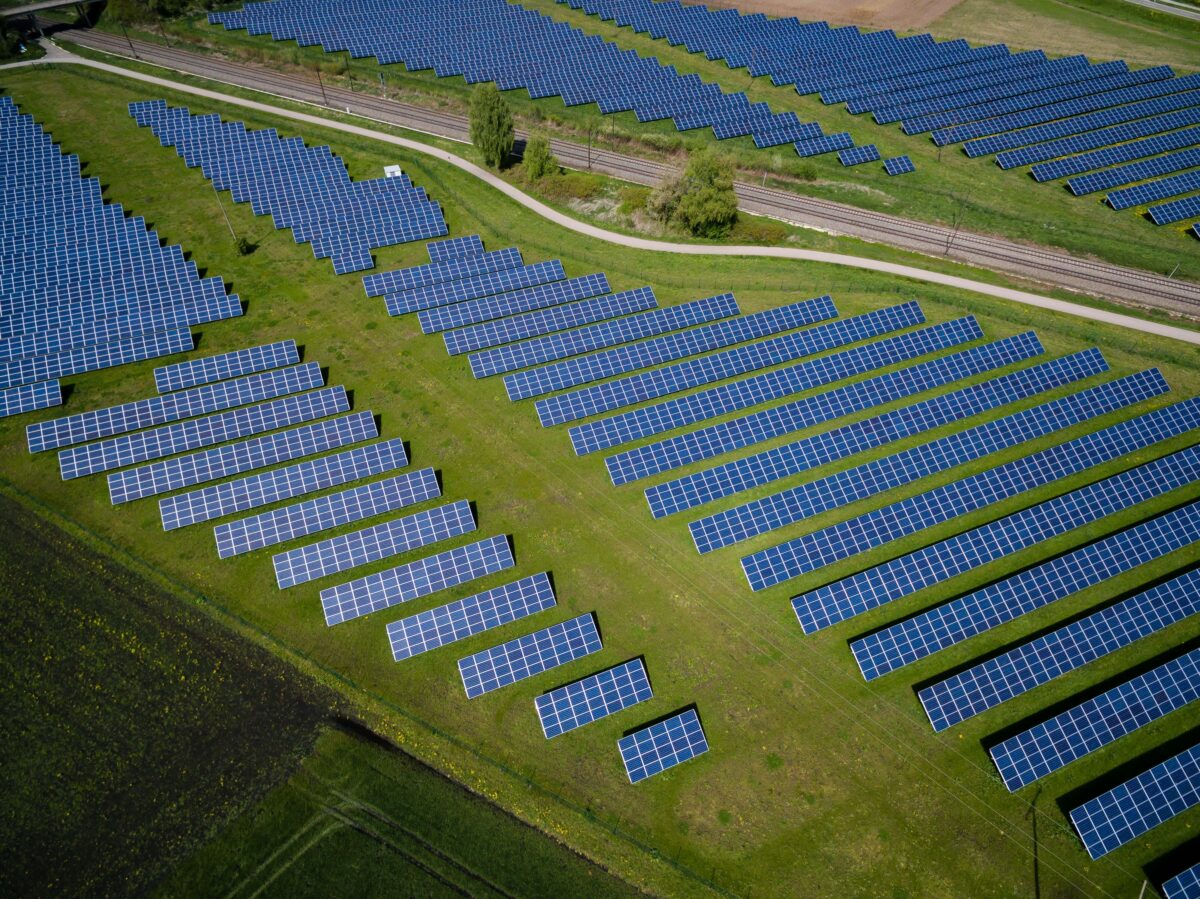
To be balanced, there might be alternative ways of achieving the same outcome as a Hot Weather Payment. The CCC is right, but perhaps a little optimistic, to suggest that our future energy system could have enough clean, cheap electricity to make this problem go away without direct financial support. Homes with solar PV could also feasibly generate enough electricity to power an AC unit.

However, we would be wise not to rely on renewable electricity generation and wider energy system reform to meet the potential costs of keeping cool in the more regular 40°C summers of the future.

22 per cent of homes will need AC

Astute readers might have realised that earlier we wrote that until recently we haven’t had a good idea of how much active cooling we might actually need. But now we have estimates of this too.

The recent CCC report states that in future climate conditions of 2°C global warming – which is around what we are heading for – approximately 22 per cent of UK homes will require active cooling, like AC, to cope with overheating. Under more drastic warming scenarios, which are still not impossible, active cooling is required for almost every single home in England.

The exact level of warming we hit is still subject to choices made by us all. But if we assume a minimum of 22 per cent of UK homes will need AC, and that many of these will be lower-income households and/or particularly vulnerable to heat-related harm, the question of how these households will afford to run their AC units when they need to becomes inescapable.

A Hot Weather Payment might not be the best solution. Wider electrification, solar PV, battery storage, and smarter electricity tariffs could instead reduce cooling costs over time. Either way, the time to begin that conversation has clearly come.

Further reading

You can find original research from Matthew Scott at the Chartered Institute of Housing and Mehri Khosravi at the University of East London below:

From building codes to behaviour: Strengthening extreme heat adaptation policy in the United Kingdom – May 2026

Heat Adaptation in the UK: Policy Brief – October 2025

A nation unprepared: Extreme heat and the need for adaptation in the United Kingdom – June 2025

Would you like to write for Red Brick? Email rose.grayston@gmail.com to pitch your piece (c.600-900 words)

Categories
Blog Post

Community Energy for the Future

For too long, we’ve relied on energy produced and owned abroad – empowering oligarchs while multinational oil and gas companies make record profits all whilst our communities face higher bills which force them to make impossible decisions.

With prices reaching record highs, there has never been a more important moment to invest in cheap, clean renewable energy produced and owned right here in the UK.

At the Co-operative Party, we know that ownership matters. And that’s why we back community-owned energy, where local people own and control renewables like solar panels and wind farms that power their communities because we know that community energy organisations can play an instrumental role in tackling the crises the UK faces today – including the ongoing cost-of-living and energy crisis – the collective action taken by organisations has the unique ability to bring people together, to involve them in the project, allow them the opportunity to take control of assets and also, educate.

We know that many of the solutions to the energy crisis require a less centralised approach – ones which are owned locally and where communities can see the benefits. We are calling for a massive investment in community energy to deliver transformative change to the energy system, by building renewable energy capacity and putting communities in control.

Community energy schemes across the UK are empowering local people so they not only have more say on how energy is produced and where any profits are invested but they increase resilience and, in most cases, have more awareness of the key issues being felt locally meaning they are in a better position to adapt and support the most vulnerable members. 

Many of those community energy organisations also look at energy saving – educating their members and local people on what they can do to become more energy efficient. Co-operative networks of households, community organisations and businesses can be highly effective in engaging households and communities on energy saving and retrofit with them encouraging take-up as well as behavioural change. For many this is because of trust, these initiatives are owned and run by the community, which they know has the interests of that area at its heart. Unlike multinational corporate companies who rip off communities only to move on to the next one, local community energy organisations have the trust to support local people and bring about real change. 

And we know for many households across the country, the quality of housing can impact the cost of energy. With notoriously draughty, damp, and cold homes which are increasingly expensive to heat. It is estimated that 19 million homes in the UK fail to meet the basic energy efficiency standards. That is 19 million households who are paying higher bills, are potentially putting their health at risk from living with damp and cold and are unintentionally contributing to the climate emergency. 

Upgrading our homes through retrofitting is one of the best ways we can tackle the ongoing issues regarding energy consumption and efficiency. By ensuring buildings are properly insulated we can help reduce the cost of energy whilst future-proofing homes all while doing our bit for the climate.

Linking in what the idea that a key benefit of community energy companies is the trust they provide – Ireland’s home retrofit program tells us that establishing ‘one-stop-shops’ within communities is critical and can be the key factor in supporting local people to make these changes.

They can provide that advice, advocacy, and retrofit to make it happen. And it is important to remember when we talk about retrofitting, it is not always on the large scale such as full-house refit, in half an hour through low-cost measures you can save a household 10% of their energy use. 

Across the country, co-operatives like Retrofit Works, Carbon Co-op, and Loco Home are already in communities showing us how it can be done – educating local people and acting on retrofitting but we need one in every community. 

Recognising the difference local community energy companies and project are already making to areas is crucial but we want to see more of them up and down the country.

Making that a reality will take political will and resources – our sister party, the Labour Party’s proposed ‘Local Power Plan’ will prioritise expanding access to cheaper, cleaner power across the country through the creation of GB Energy which would allocate resources to support local power in partnership with communities and create a million new owners of energy in the UK.

At the Co-operative Party we are supporting that work and empowering our members to act locally to support the growth of community energy. Whether it is by contacting their local elected politicians to resource community energy or make it easier for projects to get off the ground, getting involved locally if they have schemes in their area or spreading the word of how community energy is already benefiting people and why it is important, we increase the accessibility of it.

Community energy has the power to tackle the crises we face as a society today – including the cost of living and climate change by providing cheaper and cleaner alternatives all whilst empowering local people and creating a more democratic way of working where people can see the benefits to the local economy.


Emma Hoddinott

Emma is the Assistant General Secretary of The Co-operative Party

Categories
Blog Post

Wanted: A Long Term Plan for Home Energy Efficiency

Anthony lives in a 1970s bungalow owned by his local housing association in Greater Manchester.  His home was part of an energy efficiency pilot scheme, where the housing association installed solar panels, triple glazed windows, new doors and cavity wall insulation.  The retrofit works have brought his home up to Energy Performance Certificate B, which means, in energy performance terms, his 1970s bungalow is now pretty much good as new.

It’s clear from talking to Anthony – on a visit with his local Labour MP – that the work had made a real difference to him. Not just cost savings, but also the benefits to his health. He told us:

“The solar panels are great – some days the smart meter hardly moves and it’s keeping my payments down. The triple glazing is amazing; it’s so quiet now, where it was noisy before.
“Overall I feel like the heat stays in my house and I haven’t needed to have it on as much.
“This work has changed my life completely.”

You hear stories like Anthony’s whenever you visit residents who’ve benefitted from investment in the energy efficiency of their homes. And there’s an increasing number of them.  In a quiet revolution, housing associations and councils across England have spent the last few years piloting ways to make homes cosier and greener.  We’ve now got approaches that work in a range of circumstances; what we need is the support to roll these out to more homes.

That means a long-term plan for home energy efficiency.  The reason retrofit has never reached scale before is the stop-start, feast and famine approach to funding that consecutive Governments have adopted.

The Social Housing Decarbonisation Fund, which contributes to the cost of energy efficiency upgrades in council and housing association homes, is a good example. Last Autumn’s bidding round offered up to £800m of match-funding to councils and housing associations.  The round this Autumn is worth just £80m.  A welcome top-up, but not the long-term, predictable funding that councils and housing associations need.

Why do we need support from Government?  Simply, because the cost of energy efficiency works is huge. The housing association sector alone is planning to invest £70bn by 2050 in the fabric, heating systems and components of their existing homes. But fully decarbonising all housing association homes – vital to deliver on net zero ambitions like Labour’s green power mission – will cost at least a further £36bn.

Government support helps us fill that gap.  Every penny the Government invests in energy efficiency is a penny that doesn’t have to come out of budgets for much-needed new social housing.

And there’s consensus across our sector on what’s needed.  We want to see the current Government bring forward the balance of their pledged £3.8bn for social housing decarbonisation as soon as possible.  That would create the certainty our sector needs to continue their good work.

In the longer-term though, we need a much more ambitious plan to deliver energy efficiency improvements in social housing – and in other tenures, too.  There’s broad consensus across those working on greening our housing that a commitment of at least £6bn per year is what’s required to roll-out energy efficiency improvements at the scale needed to tackle our cost of living, energy security and climate change crises.

That’s why – at Labour Housing Group’s retrofit fringe in Liverpool – we were pleased to hear Shadow Minister for Clean Power and Consumers, Jeff Smith MP, reiterate Labour’s commitment to delivering a £6bn per annum warm homes plan by the end of a Labour Government’s first term.

Our homes are fundamental to our health and wellbeing. Decent and affordable homes like Anthony’s must be available for everyone, but right now they’re not.

The lack of a long-term plan for housing has led to the housing crisis we are living through today. The issues we face around housing are systemic. If we don’t act to fix the housing crisis, things will get much worse for people living in England.

A sustained commitment to funding energy efficiency works at scale is a vital part of the long-term plan for housing that we need.

Social housing has a retrofit model, we know what works, but we need the support to roll out that model at scale.  It can start in the social rented sector but moving quickly into the private rented sector, where standards are worst, and into the owner-occupied sector.

So we need support from all political parties to invest in energy efficiency.  It’s the biggest single thing parties can do to make sure that more people benefit from works like those to Anthony’s home; improvements that – in his words – have changed his life.


Rhys Moore

Rhys is the Executive Director of Public Impact at the National Housing Federation

Tracy Harrison

Tracy is the Chief Executive of the Northern Housing Consortium